Provide the best processing solutions
- All
- Product Name
- Product Keyword
- Product Model
- Product Summary
- Product Description
- Multi Field Search

Views: 0 Author: Site Editor Publish Time: 2025-11-11 Origin: Site
The world of manufacturing has evolved tremendously in recent years, thanks to advancements in automation and machine technology. CNC (Computer Numerical Control) machines have played a pivotal role in this transformation. CNC lathes, in particular, are vital for producing complex parts with high precision, making them essential tools in industries ranging from automotive to aerospace. Among the different designs of CNC lathes, the slant bed CNC lathe stands out for its distinct design and its exceptional performance in precision machining. Unlike traditional CNC lathes, which use flat beds, the slant bed design offers unique advantages that greatly enhance efficiency, stability, and machining quality. This article delves into the features, evolution, advantages, and applications of the Slant Bed CNC Lathe, shedding light on why it is considered a cutting-edge solution for high-precision machining tasks.
CNC lathes have revolutionized the manufacturing world by providing faster, more accurate, and more automated methods of machining. The first CNC lathes were designed to automate the operations of conventional manual lathes, replacing manual control with computer software that allows for greater precision and repeatability. Early CNC lathes utilized flat beds, which were a standard design that provided adequate support and stability for the workpiece.
However, as industries began demanding higher precision and efficiency, the limitations of the flat-bed design became apparent. One significant drawback was the difficulty of managing chip removal during the machining process. As cutting tools remove material from the workpiece, chips and coolant need to be efficiently evacuated to prevent overheating, clogging, and tool wear. In flat-bed designs, chips could accumulate in the work area, leading to potential issues with machine performance and machining quality.
In response to these challenges, engineers began developing alternative CNC lathe designs. The slant bed CNC lathe emerged as a superior solution, providing improved chip removal, enhanced machine stability, and superior precision. The introduction of the slanted bed design marked a significant evolution in CNC technology, addressing many of the limitations of the traditional flat-bed models.
The primary distinguishing feature of the slant bed CNC lathe is its unique design. Unlike flat-bed CNC lathes, which feature a horizontal bed, slant bed lathes have an inclined bed that is typically angled between 30° and 45°. This design has several key benefits that make the slant bed lathe a preferred choice for high-precision machining applications.
One of the most significant advantages of the slant bed design is the improvement in chip removal. The slanted bed allows the chips generated during the cutting process to naturally fall away from the work area, preventing clogging and ensuring continuous coolant flow. This efficient chip evacuation reduces the risk of overheating and damage to both the workpiece and the cutting tools, leading to longer tool life and more consistent machining results.
In addition to better chip removal, the slant bed design enhances the rigidity and stability of the machine. The inclined bed structure helps distribute the forces generated during machining more evenly, which minimizes vibrations that could negatively impact the accuracy of the cutting process. This increased rigidity makes slant bed CNC lathes ideal for high-precision applications that require tight tolerances and superior surface finishes.
Furthermore, slant bed CNC lathes offer improved ease of maintenance. The open and inclined design provides better access to the machine's internal components, making it easier for operators to perform routine maintenance and troubleshooting tasks. This accessibility reduces downtime and enhances the overall efficiency of the machine, leading to increased productivity.
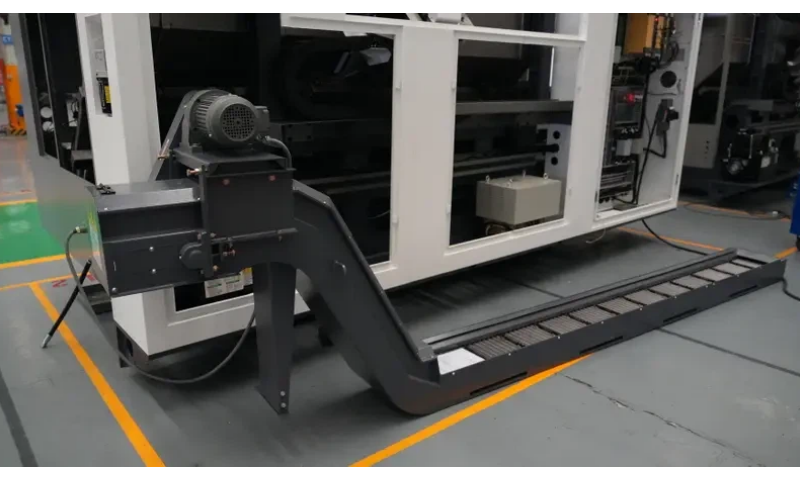
Slant bed CNC lathes offer several key advantages that make them a popular choice in precision machining. These advantages are a direct result of the innovative slanted bed design, which enhances several critical aspects of machining.
1. Enhanced Chip Removal:
The most notable advantage of the slant bed design is its superior chip removal capabilities. The inclined bed naturally facilitates the downward movement of chips, preventing them from accumulating near the cutting tool or workpiece. This improves the machining process by ensuring that the cutting tool remains clean, preventing overheating and tool wear. The efficient chip evacuation also allows for higher cutting speeds, reducing machining time and increasing productivity.
2. Improved Machine Stability:
Slant bed CNC lathes offer improved rigidity and stability compared to traditional flat-bed lathes. The slanted design helps to distribute the cutting forces more evenly across the machine's structure, which minimizes vibrations and tool deflection during machining. This results in higher precision, better surface finishes, and greater consistency in the finished product. The enhanced stability of slant bed lathes makes them ideal for high-performance applications that demand tight tolerances and superior surface quality.
3. Higher Precision and Accuracy:
Because of the improved rigidity and stability, slant bed CNC lathes are able to maintain better control over cutting parameters, leading to higher precision and accuracy in machining. The machine can maintain a consistent cutting force, which is crucial for achieving tight tolerances. Whether it's producing small, intricate parts or large, heavy-duty components, the slant bed design ensures that the final product meets the required specifications with minimal deviation.
4. Faster Machining Speeds:
The slant bed design enables faster chip removal, which allows the machine to operate at higher speeds without the risk of overheating or clogging. This increases the overall efficiency of the machining process, reducing cycle times and allowing for more parts to be produced in a given time. Faster machining speeds contribute to increased productivity, making slant bed CNC lathes an excellent choice for high-volume production runs.
5. Reduced Tool Wear and Maintenance:
With more efficient chip removal and improved cooling conditions, slant bed CNC lathes experience less wear and tear on cutting tools. This prolongs the life of the tools and reduces the frequency of tool changes, lowering operational costs. The ease of maintenance due to the open and accessible design also helps reduce downtime and ensures that the machine remains in optimal working condition for longer periods.
Slant bed CNC lathes are used in a wide range of industries that require high-precision machining. These industries rely on slant bed lathes for their superior performance in producing complex and intricate parts.
1. Automotive Industry:
The automotive industry is one of the largest sectors that benefits from the use of slant bed CNC lathes. These machines are commonly used to manufacture engine components, transmission parts, brake systems, and other critical automotive components. The slant bed CNC lathe’s ability to produce high-precision parts with tight tolerances is essential for ensuring the performance, safety, and reliability of automotive systems.
2. Aerospace Industry:
In the aerospace industry, precision is paramount, and slant bed CNC lathes are widely used for manufacturing turbine blades, landing gear components, and other critical aerospace parts. The enhanced rigidity and stability of slant bed lathes make them ideal for producing parts that must withstand extreme stresses and temperatures. The ability to achieve high precision ensures that these components meet the strict safety and performance standards required in the aerospace sector.
3. General Engineering and Metalworking:
Slant bed CNC lathes are also used in general engineering and metalworking industries. These machines are suitable for producing a wide variety of parts, including machinery components, industrial tools, and medical devices. Whether it’s for small-scale production or large industrial runs, slant bed CNC lathes provide the necessary precision and efficiency to meet the diverse needs of these industries.
4. Medical Device Manufacturing:
In medical device manufacturing, precision is crucial for ensuring the safety and functionality of the products. Slant bed CNC lathes are used to produce components such as surgical instruments, implants, and diagnostic devices. The high-precision capabilities of these machines make them an excellent choice for producing parts that require tight tolerances and superior surface finishes.
The slant bed CNC lathe has become a vital tool in modern manufacturing due to its superior performance in precision machining. Its unique design offers enhanced chip removal, improved machine stability, and better precision, making it a preferred choice for industries that demand high-quality, high-precision parts. Refine is proud to offer state-of-the-art slant bed CNC lathes that deliver unparalleled productivity, reliability, and accuracy.
Contact Us to learn more about our range of slant bed CNC lathe solutions and discover how our machines can improve your manufacturing processes.
Q1: What is a slant bed CNC lathe?
A slant bed CNC lathe is a type of CNC lathe where the bed is inclined at an angle. This design enhances chip removal, stability, and precision, making it suitable for high-precision machining applications.
Q2: How does the slant bed design improve machining efficiency?
The inclined bed allows for efficient chip removal, reducing the risk of overheating and tool wear. This enables the machine to operate at higher speeds, improving overall machining efficiency.
Q3: What industries benefit from using slant bed CNC lathes?
Slant bed CNC lathes are widely used in industries such as automotive, aerospace, medical device manufacturing, and general engineering, where precision and efficiency are critical.
Q4: Why choose a slant bed CNC lathe over a flat-bed CNC lathe?
Slant bed CNC lathes offer better chip removal, improved stability, and higher precision compared to flat-bed lathes, making them more suitable for high-precision, high-performance applications.


